
Heavy-Duty Off-Highway Transmission Guide
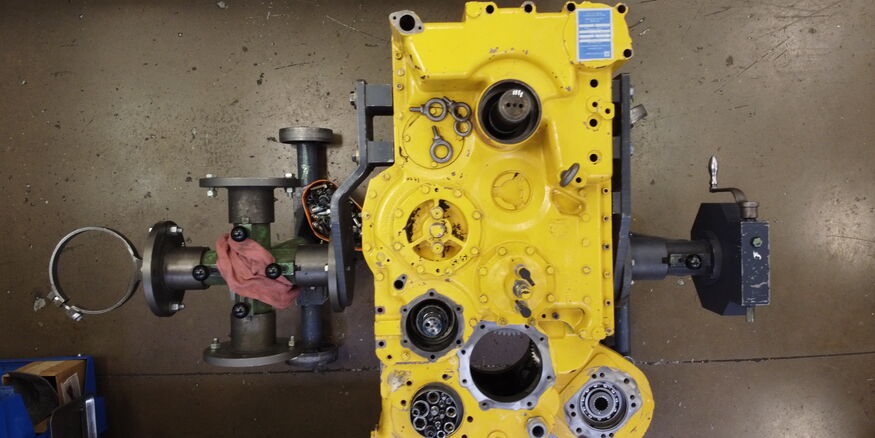
At a Glance
- Off-highway transmissions multiply torque and control direction under heavy load.
- Most loaders and material handlers use a torque converter and powershift gearbox.
- Oil, cooling, and operating habits have the biggest effect on transmission life.
Wheel loaders, forklifts, graders, and mining machines all depend on a heavy-duty transmission to turn engine power into usable work. These transmissions face conditions that would quickly destroy a typical on-highway gearbox. This guide covers what heavy-duty transmissions do, where they are used, how they differ from on-highway designs, and what affects how long they last.
What Does a Heavy-Duty Transmission Do?
A heavy-duty transmission sits between the engine and the axles or driven equipment. Its job is to multiply engine torque, provide a range of speeds, and control direction of travel. This lets the engine stay in its most efficient RPM range while the machine moves slowly under heavy load, travels between work areas, or changes direction many times an hour.
Where Heavy-Duty Transmissions Are Used
- Construction: Wheel loaders, motor graders, backhoe loaders, and rough terrain cranes
- Material handling: Forklifts, telehandlers, reach stackers, and container handlers
- Mining: Underground loaders, haul trucks, and utility vehicles
- Agriculture and forestry: Tractors, skidders, forwarders, and specialty harvesters
- Oil and gas: Well service rigs and fracturing pump units
- Other industries: Airport ground support equipment, aerial work platforms, and railcar movers
How Off-Highway Transmissions Differ from On-Highway Designs
Off-highway equipment works in a very different environment than a highway truck, and its transmission is built for it:
- Frequent direction changes: A loader may shuttle between forward and reverse hundreds of times per shift.
- High torque at low speed: Pushing into a pile or lifting a load requires maximum torque at near-zero ground speed.
- Shock loads: Impacts, sudden stops, and uneven terrain send shock back through the driveline.
- Harsh conditions: Dust, mud, water, heat, and cold are part of normal operation.
- Remote mounting: Many off-highway transmissions mount separately from the engine and connect through a driveshaft.
To handle these demands, most off-highway transmissions pair a torque converter with a powershift gearbox. The torque converter provides smooth engagement and torque multiplication, while hydraulically applied clutches allow shifting under load without a clutch pedal.
Main Types of Heavy-Duty Transmissions
Heavy-duty transmissions fall into a few main categories, each suited to different machines:
- Manual: Driver-operated clutch and gear selection, found mainly on older or simpler equipment
- Powershuttle: Manual range selection with hydraulic forward and reverse
- Powershift: Hydraulic clutches shift speeds and direction under load, the most common type for loaders and material handlers
- Automatic: Electronically controlled powershift units that select gears on their own
- Hydrostatic: Hydraulic pump and motor drive with infinitely variable speed
- Hydromechanical: A combination of hydrostatic and mechanical paths for variable speed with higher efficiency
Key Transmission Components
Most powershift transmissions share the same core components: a torque converter, clutch packs, gear sets and shafts, a hydraulic control valve, a charge pump, filters, and an oil cooler. Together they couple the transmission to the engine, select gears, and keep the oil clean and cool.
What Affects Transmission Life
Heavy-duty transmissions are built to last, but a few factors have an outsized effect on their service life:
- Oil condition: Using the specified oil, keeping it at the correct level, and changing it on schedule
- Filtration: Replacing filters on time to keep wear particles from circulating
- Cooling: Keeping oil coolers clean, since overheating breaks down oil and damages clutches and seals
- Operating habits: Avoiding direction changes at high speed or high engine RPM, which put heavy load on clutches
- Contamination: Repairing leaking seals and damaged breathers that let water and dirt in
- Loading: Staying within the machine's rated capacity
Warning Signs of Transmission Trouble
- Slipping or loss of power under load
- Delayed or harsh engagement when shifting
- High transmission oil temperature
- Low or fluctuating clutch pressure
- Grinding, whining, or other new noises
- Metal particles in the filter or on the drain plug
Catching these signs early often keeps a repair limited to clutch packs or seals instead of a full rebuild.
Repair, Rebuild, or Replace?
When a transmission fails, the main options are repairing the specific failed parts, rebuilding the unit, or installing a remanufactured or new replacement. The right choice depends on the extent of the damage, the condition of the case and major components, how much downtime the operation can absorb, and the age of the machine. Remanufactured exchange units can shorten downtime because the replacement is ready before the failed unit is removed.
Information to Have When Identifying a Transmission
- Transmission make, model, and serial number from the ID tag
- Machine make, model, and serial number
- Engine make and model
- Description of the symptoms and when they occur
Summary
Heavy-duty off-highway transmissions multiply engine torque, provide a range of speeds, and handle constant direction changes in harsh conditions. Most loaders and material handlers use a torque converter paired with a powershift gearbox, while hydrostatic and hydromechanical designs serve machines that need smooth, variable speed. Clean oil, good filtration, effective cooling, and good operating habits do the most to extend transmission life.
Frequently Asked Questions
A powershift transmission uses hydraulically applied clutch packs to change speed and direction under load, without the operator using a clutch pedal.
A torque converter couples the engine to the transmission through fluid, which smooths engagement, absorbs shock, and multiplies torque when the machine is under heavy load at low speed.
Intervals vary by manufacturer, machine, and duty cycle. Follow the service schedule in the machine or transmission manual, and shorten intervals in severe conditions.
Common signs include slipping, delayed or harsh engagement, high oil temperature, low clutch pressure, new noises, and metal in the filter.
A remanufactured unit is rebuilt to specification and is often available as an exchange, which can reduce downtime compared with waiting for a rebuild.
Heavy-Duty Transmissions
Lorem ipsum dolor sit amet, consectetur adipiscing elit, sed do eiusmod tempor incididunt ut labore et dolore aliqua.
- Heavy-Duty Off-Highway Transmission Guide
- Industrial Transmission Components: What's Inside a Powershift Transmission
- Types of Heavy-Duty Transmissions